PPF and Car Wash Conundrum: Maintenance, Swirls, and Ceramic Top Coats
Paint Protection Film (PPF) has become the go-to choice for car enthusiasts and owners who want to preserve their vehicle’s flawless finish. From rock chips to road grime, PPF acts as a resilient shield that protects your paint from everyday hazards. Yet, one of the most common questions remains – how do you properly wash and maintain a car protected with PPF?
This guide answers every major question – from how to wash a car with PPF to whether ceramic coatings can boost protection.
Understanding How PPF Works
Before diving into cleaning and PPF care, it’s essential to understand what PPF actually does. Paint Protection Film is a thermoplastic urethane film applied over your car’s exterior panels. It’s designed to absorb minor abrasions, resist UV fading, and even self-heal light scratches when exposed to heat.
Unlike wax or ceramic coatings, PPF maintenance offers physical protection rather than chemical resistance alone. Its layered structure includes:
- Topcoat layer: Provides UV and chemical resistance.
- Elastic polyurethane layer: Absorbs impact and self-heals.
- Adhesive base: Bonds to the vehicle’s clear coat.
This composition allows PPF maintenance to defend your car against debris, road tar, and bird droppings – but it still requires proper maintenance to remain effective.
Can You Wash a Car with PPF?
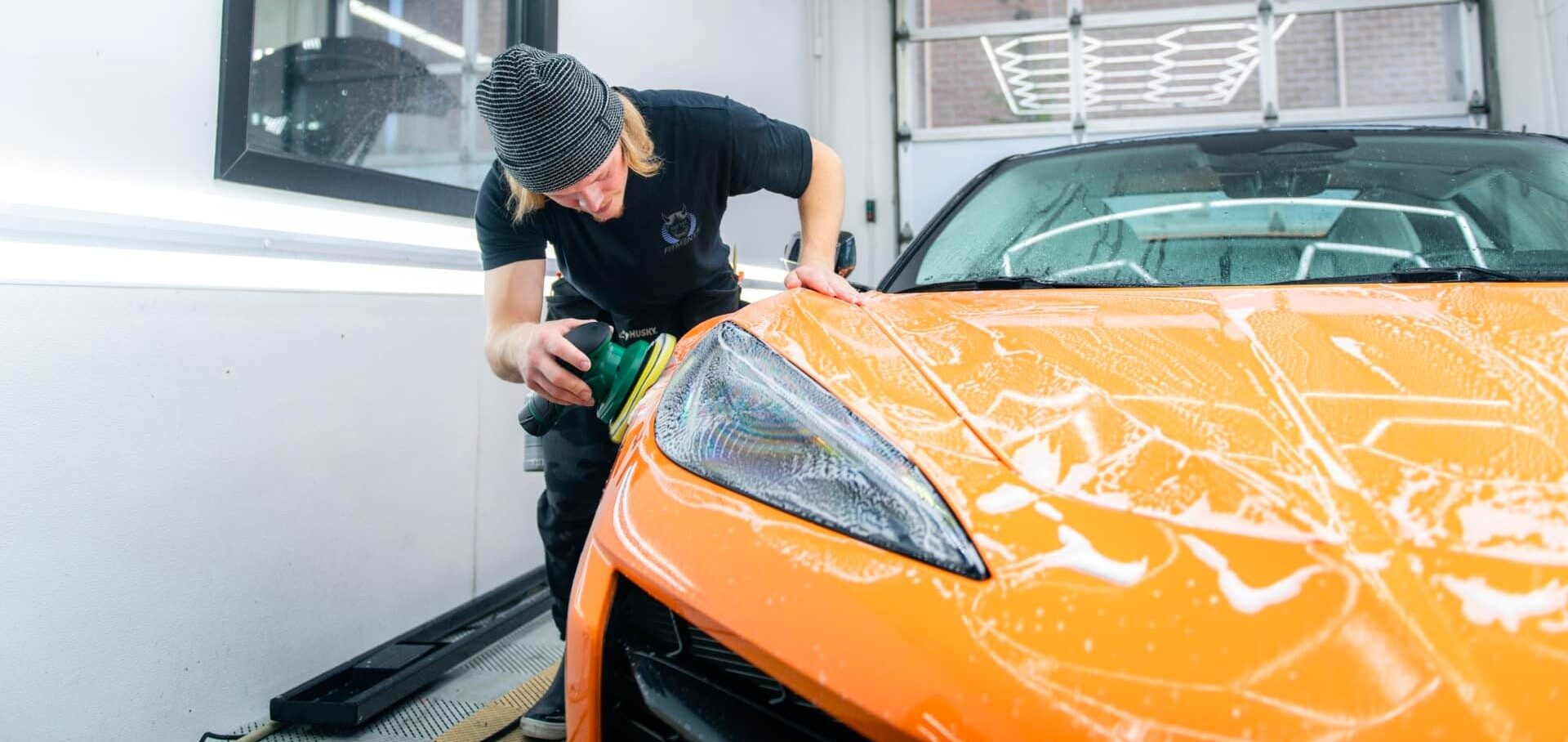
Absolutely – but technique matters. Washing a PPF-covered car incorrectly can cause swirl marks or edge lifting, especially in the first few days after installation.
When to Wash
Wait at least 7 days after installation before your first wash. This allows the adhesive to cure and prevents moisture from getting trapped under the film.
How to Wash a Car with PPF
Here’s the best approach for a PPF wash:
- Rinse thoroughly with clean water to remove loose dirt.
- Use a pH-neutral car shampoo that’s safe for PPF. Avoid harsh detergents or degreasers.
- Wash with a soft microfiber mitt using the two-bucket method (one for soap, one for rinse).
- Rinse again with low-pressure water.
- Dry gently using a clean microfiber towel or air blower to prevent streaks.
Avoid automatic car washes with stiff brushes, as these can cause micro-abrasions. If you’re wondering how to clean a PPF car after a long road trip, a gentle hand wash followed by a detail spray is ideal.
Products to Avoid
- Petroleum-based cleaners
- Solvents or tar removers (unless PPF-safe)
- Abrasive polishes
- Strong alkaline soaps
With proper washing, you’ll preserve both the film’s clarity and your car’s showroom shine for years.
Learn professional PPF maintenance techniques. Get a Quote
Swirl Marks and Scratches: What You Need to Know
Even though PPF maintenance is designed to resist minor damage, improper washing can still lead to visible swirl marks or fine scratches on the surface. These often occur when dirt or grit is dragged across the film during washing or drying.
Why Swirls Happen
Swirl marks are not actual scratches in your car’s paint but rather in the top layer of the PPF. The glossy surface of the film can highlight these micro-abrasions under direct sunlight. Most high-quality films feature self-healing properties, allowing them to recover from light swirls with the application of heat – either from sunlight or a heat gun.
To prevent swirls, always:
- Use clean microfiber towels (never reuse one that’s dropped on the ground).
- Rinse your mitt frequently during the wash.
- Avoid washing under direct sunlight, where soap can dry quickly.
- Use a lubricated quick detailer or rinseless wash for light cleaning.
If you already have minor swirls, gently applying warm water or exposing the car to sunlight for a few hours often restores clarity. For deeper scratches, professional heat treatment or polishing may be necessary – but only with PPF-safe products.
Ceramic Coating Over PPF – Is It Worth It?
Ceramic coatings provide a hydrophobic layer that repels water, dust, and contaminants, making the car easier to clean. When applied over PPF, it enhances gloss and adds chemical resistance – complementing PPF’s physical protection.
Key Benefits of Ceramic Coating on PPF
- Easier maintenance: Dirt and bugs don’t stick as easily.
- Enhanced gloss: Gives the film a wet, deep look.
- UV protection: Slows yellowing and oxidation.
- Longer lifespan: Extends the film’s durability.
However, ceramic coatings don’t eliminate the need for regular PPF maintenance. You’ll still need to wash the car properly and avoid harsh chemicals. The coating only helps reduce the frequency of deep cleans and enhances resistance against environmental elements.
Professional vs. DIY Application
Applying ceramic coating over PPF maintenance requires proper technique and curing conditions. Professional installers ensure even coverage without affecting the film’s self-healing ability. While DIY kits exist, improper application can lead to high spots or streaking that may dull the finish.
Get a professional PPF checkup. Schedule an Appointment
Long-Term PPF Maintenance Tips
Proper PPF maintenance goes beyond washing – it’s about preserving clarity, preventing edge lifting, and maintaining elasticity. With time, environmental factors like UV rays, hard water, and pollution can degrade the film if neglected.
Regular PPF Care Routine
- Wash weekly or biweekly using a gentle PPF-safe shampoo.
- Dry immediately to prevent water spots.
- Use a detail spray or sealant every few washes to restore shine.
- Inspect edges and corners for dirt buildup or lifting.
- Park under shade or use a car cover to reduce UV exposure.
Avoid clay bars or abrasive pads unless they’re designed for use on PPF. For tough contaminants like bug residue or tar, use a dedicated PPF cleaner or citrus-based solution approved by your film manufacturer.
Seasonal PPF Care
In winter, salt and grime can build up quickly. A pre-rinse and foam wash are ideal for removing contaminants before physical contact. In summer, focus on preventing UV-induced haze by applying a UV-protectant spray.
Handling Contaminants the Right Way
Stubborn substances like tar, bugs, or bird droppings can etch the PPF if left unattended. Instead of scrubbing, soften them first:
- Spray a PPF-safe bug and tar remover.
- Let it dwell for 1–2 minutes.
- Gently wipe with a damp microfiber towel.
- Rinse and dry thoroughly.
If you ever wonder how to clean PPF safely, remember: less friction is better. Gentle chemistry paired with patience always wins over aggressive cleaning.
When to Replace or Recoat
Even with great PPF care, PPF doesn’t last forever. Signs that it’s time for replacement include:
- Yellowing or cloudiness that doesn’t polish out
- Film lifting at the edges
- Loss of self-healing ability
- Visible hard water or etching marks
A professional detailer can assess the condition and recommend either reapplication or adding a ceramic top coat to rejuvenate the look.
Conclusion
Your PPF is your car’s invisible armor – but even the strongest shield needs PPF care. Understanding how to wash PPF cars, how to dry them properly, and what products to avoid will ensure you keep that high-gloss finish intact for years.
Whether you’ve just installed your film or have had it for a while, California Tint is your reliable partner. Gentle washing, regular inspection, and optional ceramic coatings are our key points to long-term success.
FAQ
1. How soon after PPF can I wash my car?
Wait at least 7 days before your first wash. This allows the film adhesive to cure and prevents moisture or soap from seeping underneath the edges.
2. Can I use pressure washers?
Yes, but keep the nozzle at least 3 feet away and avoid aiming directly at film edges or corners. Use a wide spray pattern to minimize risk.
3. How long does PPF last?
High-quality PPF typically lasts 5 to 10 years, depending on climate, washing habits, and UV exposure. Proper PPF maintenance can extend its lifespan significantly.
4. Will ceramic coating void my PPF warranty?
No. Most PPF manufacturers approve ceramic coatings as long as they’re applied professionally and don’t contain harsh solvents. Always verify with your installer.
5. What’s the best way to remove bugs, tar, or bird droppings?
Use a PPF-safe cleaner or citrus-based solution. Spray, let it dwell briefly, and wipe gently with a microfiber towel – never scrub aggressively.

- Washington State Window Tint Laws: What’s Legal in WA? - March 18, 2026
- Unique Challenges for Tesla Paint Protection Film - November 24, 2025
- PPF and Car Wash Conundrum: Maintenance, Swirls, and Ceramic Top Coats - November 19, 2025