How Long Does Ceramic Coating Last?
Key Takeaways
- Ceramic coating lifespan ranges from 6 months to 10 years, driven mainly by coating grade, application quality, and how the vehicle is cared for after install.
- Professional-grade coatings like XPEL FUSION PLUS bond at the molecular level and significantly outperform DIY spray kits in both durability and warranty coverage.
- Ceramic coating protects against UV, chemicals, water spots, and contaminants. It does not prevent rock chips or deep scratches, which is where Paint Protection Film comes in.
- Skipping certified installation can void the warranty entirely, so where you have it applied matters as much as what you have applied.
How Long Does Ceramic Coating Last on a Car?
A professionally applied ceramic coating typically lasts 2 to 10 years, while DIY consumer kits usually last 6 months to 2 years. The wide range comes down to three things: the grade of the coating, the quality of the application, and how the owner maintains the vehicle afterward.
Premium professional coatings, applied in a controlled environment by a certified installer and backed by a manufacturer warranty, sit at the top end of that range. Spray-on hybrid products at the auto parts store sit at the bottom. The lifespan you actually get depends on which end of that spectrum you start on, and how disciplined you are about aftercare.
Expected Lifespan by Ceramic Coating Type
Not all ceramic coatings are the same chemistry, the same thickness, or the same install process. Here is what you can realistically expect from each tier:
| Coating Type | Typical Lifespan | Best For |
| Premium professional (9H, multi-layer) | 5 to 10 years | Long-term ownership, daily drivers, exotics |
| Mid-tier professional | 2 to 5 years | Budget-conscious owners who still want pro application |
| DIY consumer kits | 6 months to 2 years | Hobbyist detailers, short-term ownership |
| Spray-on / hybrid coatings | 6 to 12 months | Temporary protection between full applications |
XPEL FUSION PLUS, the product we install at California Tint, sits firmly in the premium professional tier. It is a 9H ceramic coating that bonds at the molecular level to paint, Paint Protection Film, and automotive glass. When installed by a certified XPEL Platinum Dealer and properly maintained, it delivers years of protection backed by a manufacturer-supported warranty.
A lifespan claim without a written warranty is just marketing. Always ask what is actually covered before you commit to a coating.
Key Factors That Affect Ceramic Coating Longevity
The same coating product can last 8 years on one vehicle and 2 years on another. The variables below are why.
Application Quality
Surface prep is the single biggest reason coatings fail early. Before the coating goes on, the paint needs to be decontaminated, clay-barred, polished or paint-corrected, and wiped with an IPA solution to strip every trace of oil and residue. Skip any of those steps and the coating cannot bond properly to the clear coat. It might look fine the first week, then start losing its hydrophobic edge within months.
This is the part of the job customers do not see and DIY kits cannot replicate at home.
Environmental Exposure
A ceramic coating shields paint from real environmental damage: UV radiation, bird droppings, tree sap, road salt, brake dust, industrial fallout, and acidic rain. The harder the environment, the harder the coating works, and the faster it ages.
In the Pacific Northwest, that means consistent year-round UV exposure even through overcast skies, heavy rainfall, pollen and moss, and for our Kitsap-area customers, salt-air exposure near the water. Inland routes also see freeze-thaw cycles in the winter months that put stress on any protective layer. A coating that lasts 7 years in a mild desert climate may need attention sooner here.
Maintenance Habits
A ceramic coating is not a “set it and forget it” product. The right care routine extends lifespan dramatically. The wrong one cuts it short.
- Wash every 2 to 3 weeks with a pH-neutral car shampoo
- Use the two-bucket method with clean, soft microfiber mitts
- Avoid automatic brush car washes and harsh detergents
- Refresh the surface with an SiO2 booster spray every 3 to 6 months
- Address bird droppings, sap, and bug splatter quickly, do not let them sit
Cheap soap and rough wash media will degrade a $1,500 coating in a year. Good habits will stretch it well past warranty.
Storage
Garaged vehicles consistently outlast vehicles parked outside daily. UV exposure, temperature swings, and constant contact with airborne contaminants all chip away at a coating over time. If your car lives outside in full sun, expect to land on the lower end of your coating’s lifespan range.
Signs It is Time to Reapply or Refresh Your Ceramic Coating
Ceramic coatings do not peel off the way wax does. They fade. Watch for these signs:
- Water no longer beads or sheets off the paint. This is the first and clearest indicator.
- The paint feels rough or “draggy” to the touch instead of glassy-smooth.
- Dirt, dust, and bug splatter cling more than they used to, and the surface is harder to clean.
- Visible dulling, especially on horizontal panels like the hood and roof that take the most sun.
If you are noticing two or more of these, the protective layer is thinning. Some coatings can be refreshed with a booster or top coat. Others need to be fully reapplied. Schedule an inspection at our Everett location or Silverdale location and we can tell you which is appropriate for your vehicle.
Not Sure If Your Coating Still Has Life Left?
Bring it in. A quick inspection at our Everett or Silverdale shop tells you exactly where your coating stands, whether a booster will refresh it, and what a fresh install would cost. No pressure, no upsell. Just a straight answer from a certified XPEL Platinum Dealer.
Why Certified Installation Matters More Than the Product Itself
Here is the part the marketing copy rarely mentions: the bottle of ceramic coating is only as good as the hands applying it.
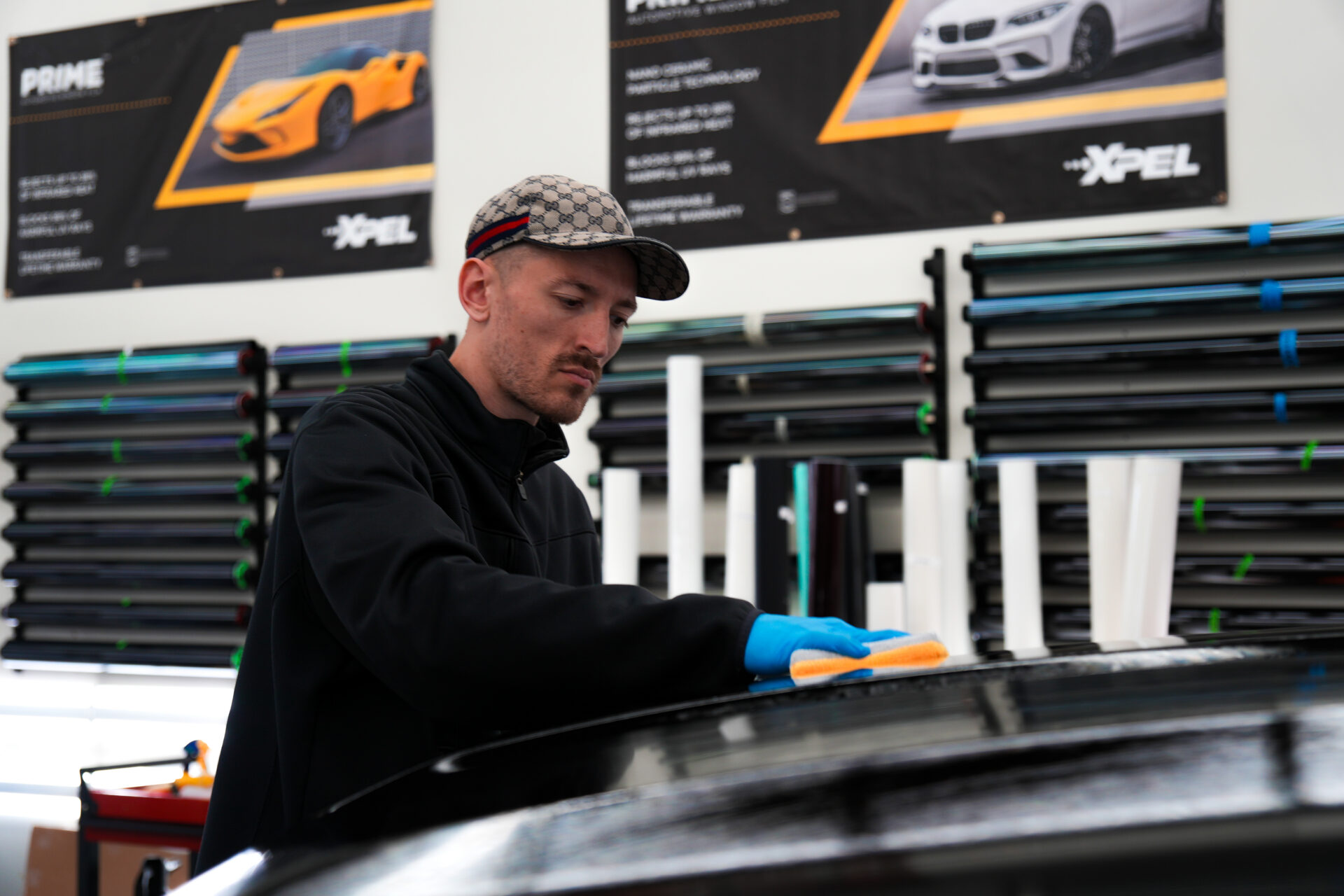
California Tint has been an XPEL Platinum Dealer since 2012, the highest certification level XPEL offers. That status is earned through volume, training, and consistent quality of work, not paid for. It is what allows us to back our FUSION PLUS installs with a manufacturer-supported warranty.
What a proper professional install actually involves:
- Multi-step decontamination wash to strip waxes, sealants, and bonded contaminants
- Iron remover and clay bar to clear road particles embedded in the clear coat
- Paint correction to address swirl marks, oxidation, and minor scratches before sealing
- IPA wipe-down to remove polishing oils so the coating bonds directly to clear coat
- Controlled-environment application and cure, away from dust, humidity, and direct sun
Skip any of those, and the coating’s effective lifespan drops sharply.
There is one more thing you should know: having ceramic coating applied by an uncertified installer voids any future warranty work. If something fails, you have no manufacturer recourse. Cheap installs are not cheap if the coating only lasts 18 months.
Professional vs. DIY Ceramic Coating: What You Actually Get
Both have a place, but they are not the same product or the same outcome.
| Professional Ceramic Coating | DIY / Consumer Kits | |
| Typical lifespan | 5 to 10 years | 6 months to 2 years |
| Application | Certified installer, controlled environment | At-home, variable prep |
| Warranty | Manufacturer-backed when certified | Limited or none |
| Long-term cost | Lower per year of ownership | Higher with frequent reapplication |
The real comparison is not “expensive vs. cheap.” It’s cost per year of ownership.
A professional coating at $1,500 that lasts 5 years works out to roughly $300 per year of protection. A DIY kit at $80 that lasts 12 months and requires you to redo all the prep work each time costs more annually once you factor in time, supplies, and the lack of warranty coverage. The math favors the professional install for anyone planning to keep the vehicle more than two or three years.
For a deeper breakdown, see our guide on DIY ceramic coating vs. professional.
Curing, Aftercare, and Maintenance Routine
The first few weeks after a ceramic coating is applied are the most important. The coating needs time to cure, and your habits during that window set the tone for the rest of its life.
The cure period. Most professional coatings need 2 to 3 weeks to fully harden. During that time, avoid washing the vehicle, keep it out of heavy rain when possible, and do not let bird droppings or sap sit on the surface.
Routine washing. Once cured, wash every 2 to 3 weeks. Use a pH-neutral car shampoo, soft microfiber mitts, and the two-bucket method (one bucket for soapy water, one for rinsing the mitt). Skip automatic car washes that use brushes.
SiO2 booster sprays. Every 3 to 6 months, refresh the surface with a ceramic booster. It revives the hydrophobic effect and adds a thin protective layer on top of the existing coating.
Annual inspection. Coatings under warranty often require periodic inspections to remain valid. Even if yours does not, an annual check helps catch wear early and extends the practical life of the coating.
For a complete walkthrough, see our Ceramic Coating Maintenance guide.
Ceramic Coating vs. Wax vs. PPF: Which Lasts Longest?
Ceramic coating is one of several paint protection options, and it solves a specific problem. Here is how it stacks up against the alternatives:
| Protection Type | Typical Lifespan | What It Protects Against | Relative Cost |
| Carnauba or synthetic wax | 8 to 12 weeks | UV, light contaminants | $ |
| Spray ceramic / hybrid | 6 to 12 months | UV, water spots, contaminants | $ |
| Professional ceramic coating | 2 to 10 years | UV, chemicals, etching, oxidation, contaminants | $$$ |
| Paint Protection Film (PPF) | 5 to 10+ years | Rock chips, scratches, abrasions, plus chemical | $$$$ |
A few honest points:
Ceramic coating is not a force field. It does not stop rock chips, parking lot dings, or deeper scratches. Anyone telling you otherwise is selling, not explaining.
For high-impact zones, PPF is the answer. Paint Protection Film is a physical layer that absorbs impacts. Many of our customers run both: PPF on the front bumper, hood, and mirrors, and ceramic coating over the rest of the vehicle (and on top of the PPF itself) for a deep gloss and easy-to-clean finish.
Wax is not in the same category. Wax lasts weeks, not years, and offers a fraction of the protection. If you have been waxing every few months, a single ceramic coating application can replace years of that routine.
Climate Considerations for Washington Drivers
Climate has a real impact on coating lifespan.
In the Puget Sound region, ceramic coatings face a specific set of challenges. Year-round moisture and overcast UV exposure still age the coating, just more slowly than desert sun. Salt-air near the water is harsh on any unprotected surface, which is exactly why our Silverdale customers tend to prioritize coating their vehicles. Moss, pollen, and tree sap are constants during the wetter months, and tree sap left on paint for even a few days can etch into a fresh coating before it has fully cured.
For drivers in the Snohomish and Kitsap County areas, we typically recommend a slightly more aggressive maintenance cadence: a quick rinse every couple of weeks, a proper wash monthly, and a booster spray every 3 to 4 months instead of the standard 6.
Why Choose California Tint for Ceramic Coating
If you are weighing professional ceramic coating, here is what California Tint brings to the job:
- XPEL Platinum Dealer since 2012, the highest certification level XPEL offers
- Two Washington locations, in Everett and Silverdale, both fully equipped for controlled-environment installs
- FUSION PLUS for paint, PPF, and automotive glass, with a single product line covering every surface that benefits from coating
- Guaranteed workmanship and full warranty support, only available through certified installers
We have been protecting vehicles in Washington since 2012, with a team that handles everything from daily commuters to Teslas, Rivians, and exotics.
Request a free quote or stop by either shop, Monday through Saturday, 9am to 5pm.
Ceramic Coating FAQs
How long does XPEL FUSION PLUS ceramic coating last?
When professionally installed by a certified XPEL Platinum Dealer and properly maintained, XPEL FUSION PLUS delivers multi-year protection backed by a manufacturer warranty. Actual lifespan depends on your environment, storage, and maintenance habits.
Does ceramic coating protect against rock chips and scratches?
No. Ceramic coating protects against UV, chemicals, water spots, oxidation, and contaminants. It does not prevent rock chips, parking lot dings, or deeper scratches. For impact protection, Paint Protection Film is the right product. Many owners combine the two.
Can I apply ceramic coating myself?
You can, with a consumer DIY kit, but expect a shorter lifespan (6 months to 2 years), no manufacturer warranty, and a result that depends heavily on your prep work. Professional installation by a certified dealer delivers significantly longer protection and a backed warranty.
How often should I wash a ceramic-coated car?
Every 2 to 3 weeks is the sweet spot. Use a pH-neutral shampoo, soft microfiber, and the two-bucket method. Avoid automatic brush car washes.
Will a ceramic coating last longer if I garage my car?
Yes. Garaged vehicles consistently get longer coating life because they avoid daily UV exposure, temperature swings, and direct contact with airborne contaminants. Vehicles parked outside in full sun will land at the lower end of any coating’s lifespan range.
What is the difference between ceramic coating and PPF?
Ceramic coating is a liquid polymer that bonds chemically to paint and protects against UV, chemicals, and contaminants. PPF is a physical film that protects against impacts like rock chips and scratches. Ceramic is about chemical and visual protection. PPF is about physical protection. Many customers use both.
Does ceramic coating come with a warranty?
Professional coatings from certified installers typically come with a manufacturer-supported warranty. The exact terms vary by product and installer. DIY kits usually do not include any warranty.
How do I know when my ceramic coating needs to be reapplied?
Water stops beading or sheeting off the paint, the surface feels rough instead of slick, dirt clings more easily, and the finish looks dull on horizontal panels. Two or more of those signs together means it is time to schedule an inspection.

- How Long Does Ceramic Coating Last? - May 13, 2026
- Carbon vs. Ceramic Window Tint: Which One Is Right for Your Car? - April 9, 2026
- Ceramic Tint vs. Regular Tint: What’s the Difference and Which Is Worth It? - April 2, 2026